We are celebrating 25 years
This year, our firm, Shar Arquitectura, celebrates its 25th anniversary. Throughout this time, our professional work has focused primarily on the development of healthcare and social care architecture.
We’ve been fortunate to work on very interesting and innovative projects related to health and the well-being of the elderly, disabled, and minors, among others. But if there’s one type of project we’ve consistently worked on over the years, it’s senior residences. From the first residences, markedly rural in nature, in the province of Valladolid almost thirty years ago, to the most recent ones, which we are just beginning to study these days, we have experienced firsthand how management criteria have changed and how this vision of geriatrics has been translated into a new architectural model, a “living” model that, adapting in a Darwinian way, has faced economic crises, the arrival of international operators, and even a terrible pandemic.
Evolution of the architectural model
Thirty years ago, the criteria we used for the construction of senior residences did not meet the level of demands regarding the quality of life for seniors that we currently have. Although many regulations were still in their infancy, certain concepts were the ones that truly shaped the spaces, such as urban planning regulations, fire protection, accessibility without architectural barriers, quality of facilities, solidity, etc. This was combined with a management philosophy that focused on social action (mostly by religious congregations), a view of old age as an illness to be treated without considering the elderly and their right to decide about their own lives, or management criteria purely focused on staff efficiency.
All of the above resulted in institutional architectures with little or no consideration for the quality of life for seniors.

Condes del Val (Madrid)
It was only 15 years ago that we began working with pioneering managers in other models. Some operators concluded that a paradigm shift was necessary through their experience in daily management, while others are beginning to understand it through models that come to us from abroad, especially from Northern Europe.
They all have something in common: for the first time, we are starting to talk about putting the elderly person at the center of this multifactorial equation. What the elderly person wants is gaining importance, without paternalistic or medical decisions, over what others think might be best for them.

Emera Carabanchel and Emera Juan Bravo (Madrid)
A new organization of interior spaces, a new treatment of the surroundings, and even a new image of the building are a consequence of this new approach.

Ortega y Gasset (Logroño)
Using only these three concepts as an initial basis, we can approximate how things have evolved over the years:
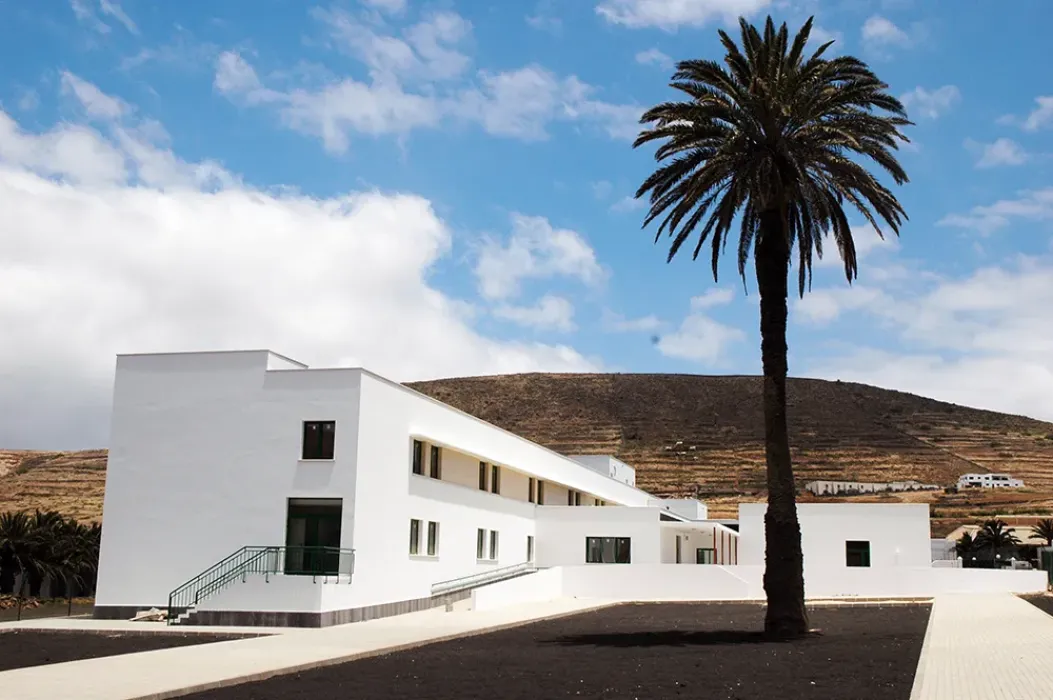
Regarding the architectural image, we can say that the main point is that the building moves away from the institutional image it had until then, and now seeks architectural integration into its surroundings. Rather than the idea that the building should remind us of a residential center or a hospital, the goal now is to achieve a more neutral image, in keeping with the space where it is located.

Amavir Haria (Lanzarote)
- When it comes to the building’s fit into its surroundings, some concepts take on great importance, such as its relationship with the surrounding population. Residences should no longer be closed, hyper-protected centers with bars on the windows or three-meter-high fences.

Emera Juan Bravo (Madrid)
- The biggest proposed changes are taking place inside the building. The goal is to find spaces that foster the fundamental concepts of the new model, such as autonomy, decision-making, dignity, and coexistence.

Camino de Olivos (Logroño) y Emera Carabanchel (Madrid)
Over the coming months, we will share our reflections here, detailing how these fundamental concepts that have evolved require a response, also from the architectural model, to the new needs arising in senior care. Now it’s time to invent a new machine.